She Remembered the Dignity: An International Women’s Day Story
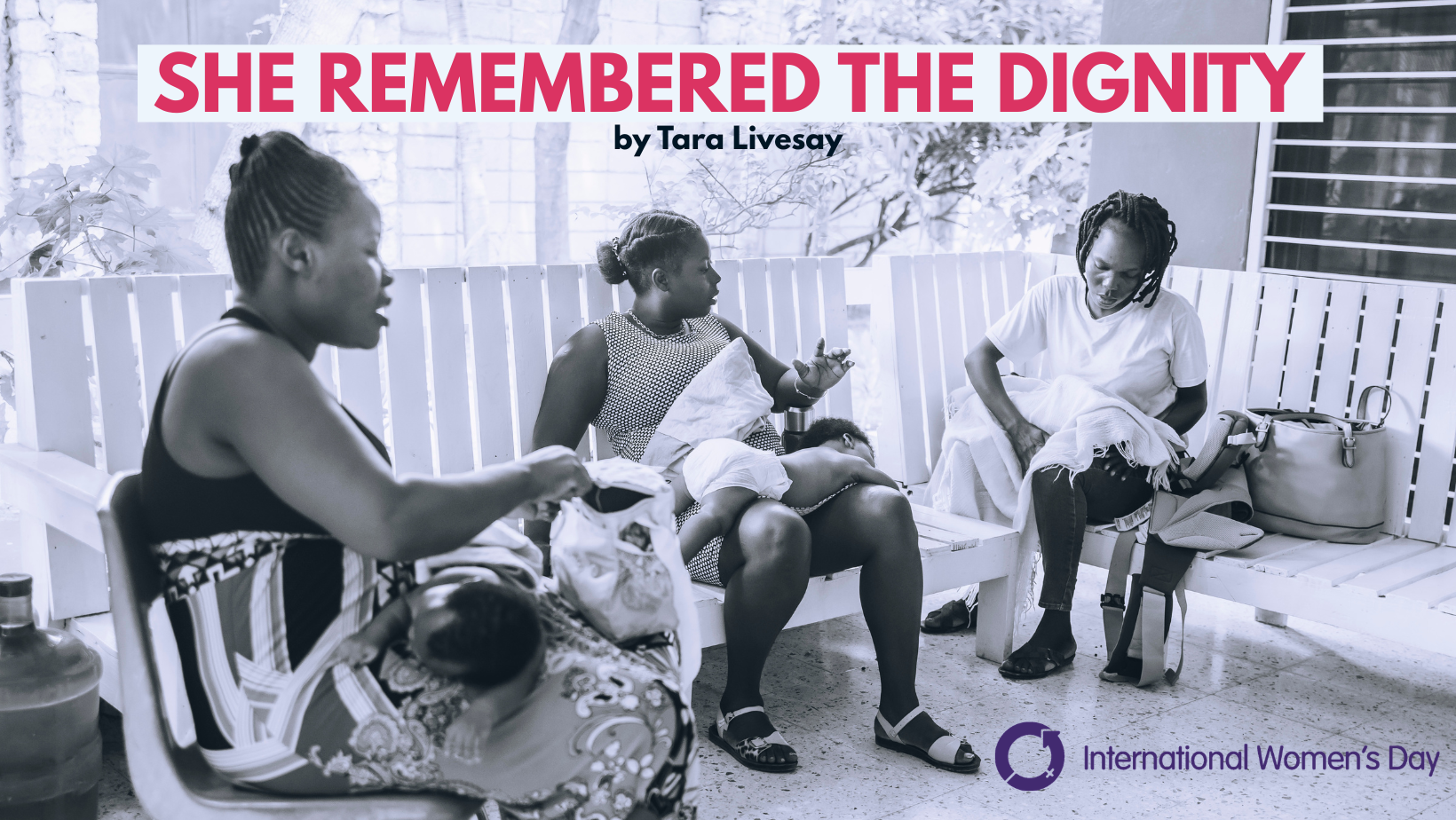
It is Thursday morning. Dust hangs thick in the air as Katiana and her neighbor Darline begin the mile-long walk to their prenatal visit. In years past, they might have flagged down a tap-tap — the colorful, crowded public buses that pulse through Port-au-Prince like a heartbeat. Now, money is tight and fewer tap-taps are available on the roads. The city is unstable. The women walk.
Katiana is 34 weeks pregnant. When Darline was newly pregnant herself and not yet sure what to do about it, she asked how to find someone to care for her. Katiana didn't hesitate – her older sister had found a maternal health program five years ago, when she was expecting her first baby. Katiana had been there for that birth. She had watched her sister labor for a long time, and she had seen the way the midwives spoke to her, touched her, and honored her. She had never forgotten it.
She remembered the dignity her sister had felt, that the midwives had honored.
That memory is what brings Katiana back. It is what she told Darline about. And it is why these two women are walking a mile through dust and uncertainty on a Thursday morning.
They are not the only ones.
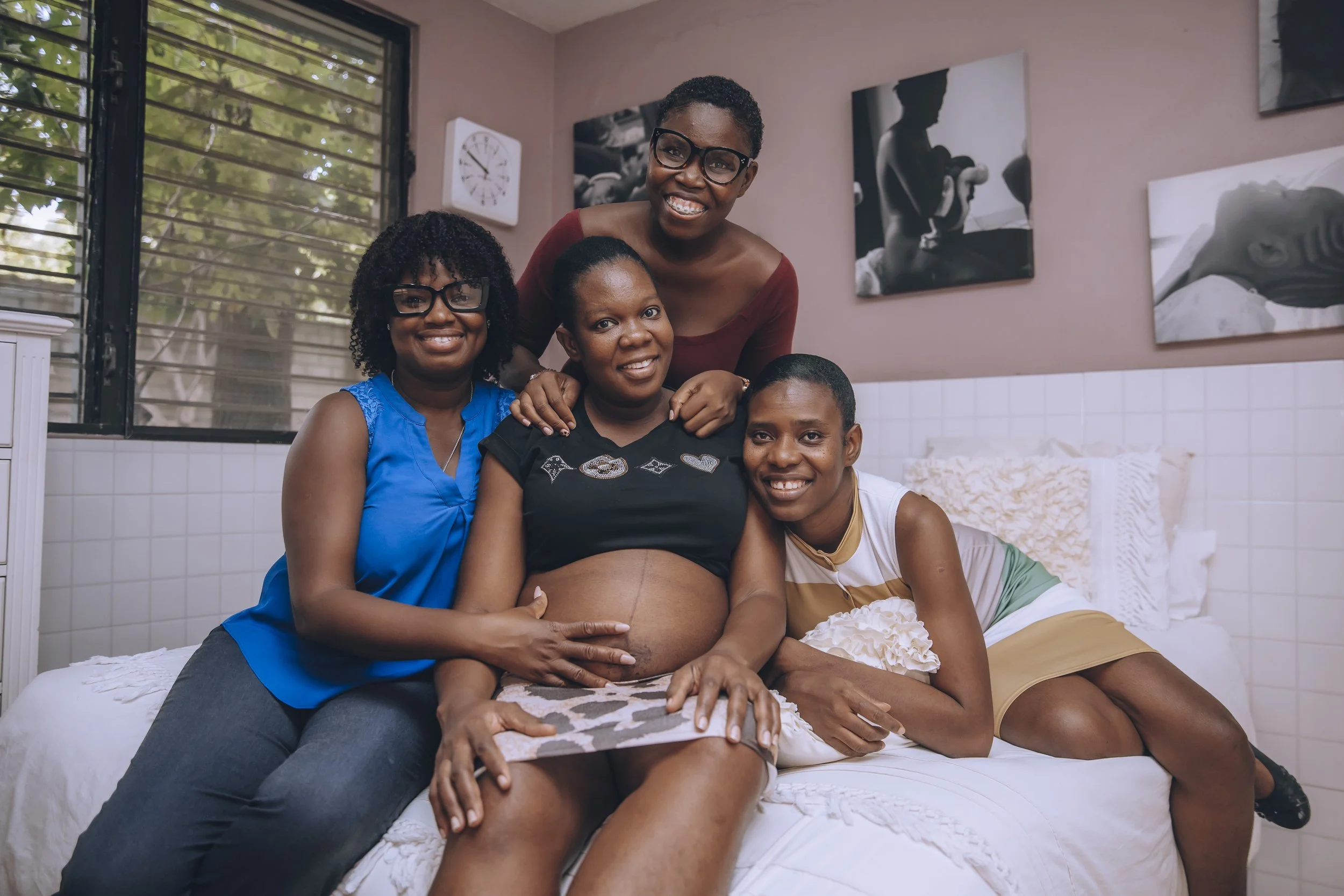
Maternity Center staff pose with an expecting mother. Photo by Jonathan Remy.
As of early 2026, Haiti's healthcare system is in near-total collapse. Most health facilities in the Port-au-Prince metropolitan area are closed or non-functional. The facilities that remain open face severe shortages of staff, equipment, and supplies. Even in better times — times that feel increasingly distant — it is estimated that more than half of pregnant women in Haiti never see a doctor during their pregnancy and never reach a hospital to deliver. Most babies are born at home, without a skilled attendant present.
The risks are enormous. The losses are real.
The Heartline Maternity Center has kept its doors open since 2007: through earthquakes, cholera outbreaks, political upheaval, and gang violence. We have remained — not because it has been easy, but because the women walking those dusty roads deserve a place that will be there when they arrive.
We offer prenatal care, labor and delivery, birth control, health education, and six full months of postpartum support — because we know that a woman's well-being doesn't end the moment her baby is born.
On this International Women's Day, dozens of women are making their way through dangerous streets to hear their baby's heartbeat, to ask their questions, to be seen, cared for and treated with respect. Some of them are coming for the first time. Some of them are coming back because they remember what it felt like to be treated with dignity — and they want that again.
Our commitment to them has not wavered. It will not.

About the Author
Tara Livesay
Tara Livesay is originally from Minnesota. She is a Certified Professional Midwife and a Licensed Midwife in the State of Texas. Tara is the director of the Heartline Maternity Center, located in Port au Prince, Haiti. Tara and her husband, Troy, along with their seven children, moved to Haiti in January of 2006, where they lived and worked for fourteen years. In addition to overseeing The Heartline Maternity Center, Tara is the co-founder of The Starting Place, a center for maternal healthcare and education in Central Texas. She’s also a co-author of The Starting Place Curriculum, which equips healthcare providers to provide holistic midwifery care in low-resource settings.